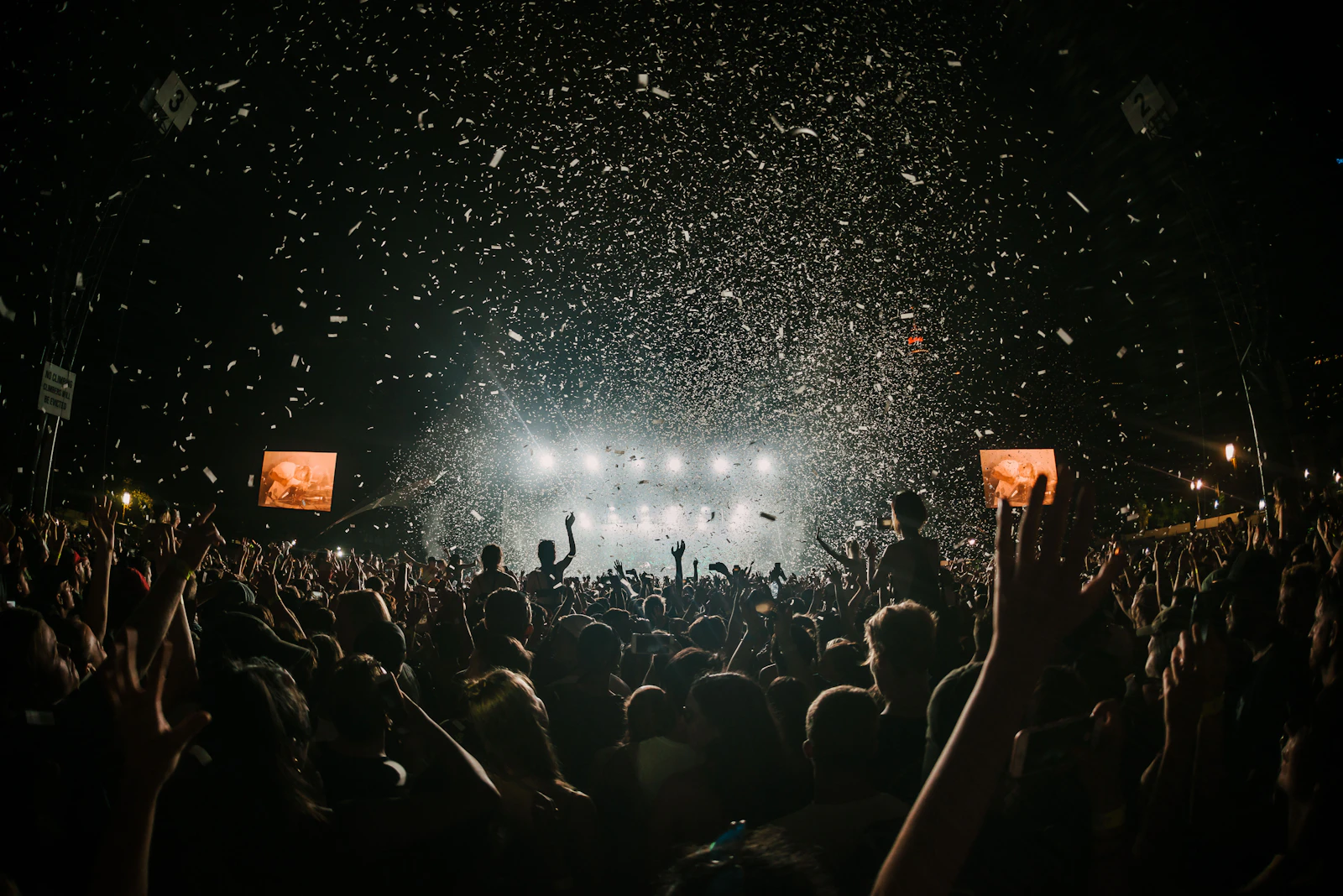
There is a specific kind of tiredness that only hosts know. It is not the tiredness of the night itself — the dinner, the party, the hike, the concert. It is the tiredness of everything that had to happen before it: the twelve messages asking 'what time again?', the poll nobody voted in, the restaurant booking made under your name, the bill you fronted, and the week you spent politely reminding six adults that they owe you $37 each.
This guide is about that invisible work — why end-to-end event management for friends is so much harder than it should be, what it costs socially, and how a single-screen approach fixes it.
Nobody stops hanging out because they stopped liking their friends. They stop because organising it became a second job.
Why is planning a team dinner or get-together so stressful?
Because a plan is not one thing. A plan is at least six separate jobs, and every one of them lives in a different app that has no idea the others exist:
- Deciding — a date, a time, a venue, a budget. Usually attempted in a chat, where opinions scroll away faster than they arrive.
- Announcing — the address, the map pin, the dress code, the start time. Pasted once, then re-pasted four more times for latecomers.
- Confirming — who is actually coming. 'Yeah maybe' is not an RSVP, but a chat can't tell the difference.
- Coordinating on the day — who is late, who is at the wrong entrance, who is bringing what.
- Settling money — the bill, the deposit, the cab, the cake. Screenshots, calculators, transfers, chasing.
- Remembering — photos scattered across nine camera rolls, most of which never get shared.
Each job is small. Together they form an administrative load heavy enough that most people quietly opt out of hosting altogether — and then wonder why their social life has gone quiet.

The five failure points of chat-based event planning
1. Details get buried
A group chat is a stream, not a record. The venue link you sent on Tuesday is 300 messages up by Friday, somewhere between a meme and an argument about parking. Every person who joins late asks the same three questions, and the host answers them individually, forever.
2. Decisions never actually close
'Whatever works for you' is the most expensive sentence in group planning. Without a structured vote, preferences pile up, nobody commits, and the host is forced to make a unilateral decision that half the group later grumbles about.
3. Attendance is a guess
You book a table for ten and seven arrive. You buy food for eight and twelve turn up. Chats have no state — no clean list of who is in, who is out, and who never opened the message.
4. Money makes it awkward
This is the one that quietly damages friendships. Somebody pays the full bill. Somebody else forgets. The host has to choose between being out of pocket or being the person who sends the reminder. Switching to a separate bill-splitting app means re-typing every name, every item, every share — then copying the totals back into the chat so people actually see them.
5. The memories evaporate
The best photo of the night is on the phone of the person who left early. It never reaches the group. A year later there is no album, no record, nothing to look back on — just a chat thread you'd have to scroll for ten minutes to reconstruct.
What does end-to-end event management actually mean?
In corporate event management, 'end-to-end' means one system carries an event from idea to post-event reporting: scheduling, invitations, RSVPs, logistics, payments and follow-up. Friend groups need exactly the same thing — just without the enterprise pricing, the spreadsheets, and the assumption that someone has been assigned the job.
End-to-end for a group of friends means: one place where the plan is created, decided, communicated, attended, paid for and remembered. One link. One screen. No switching.
How does Hoot Me's Event Hub solve this on one screen?
Hoot Me is an IRL meetup app — you find real hangouts near you and go to them. The Event Hub is the layer that makes hosting those hangouts effortless. Every event is a single screen, and that screen holds everything.
A header that answers every question before it's asked
The top of every event shows the location with a tappable map pin, the date, the start time, and a live countdown timer to kickoff. Change the venue and everyone attending sees it immediately — no re-paste, no 'wait, which bar?', no one standing outside the wrong door.
Group chat scoped to the event
Each event carries its own chat, containing only the people going. Your main friend group stays clean, and the conversation stays attached to the plan rather than dissolving into unrelated threads by Monday morning.
Polls that close decisions
Create a poll for the time, the restaurant, the trail, the playlist or the budget. People vote in one tap, results are visible in the event, and the winning option becomes the plan. Debate becomes a decision in minutes instead of days.
Bill splitting and settlement, in the same place
Add what was spent — the table, the cab, the cake, the tickets. Split evenly or item by item, assign who owes what, and the Hub does the maths. Everyone sees their own share on the same screen where they saw the invite, and marks it settled when it's paid. No separate app, no re-typing names, no chasing.
A shared album per event
Everyone drops their photos and videos into the event. The whole group gets the full set — including the shots from the phone that died at midnight — and you can push straight to Instagram or TikTok without exporting and re-uploading.
Private events for your own crew
Not every plan belongs on a public map. Set an event to Private and only invitees can see it, join it, or view the location, chat and photos. Public events are for meeting new people; private events are for the friends you already have — same Hub, your rules.

How is this different from using WhatsApp plus Splitwise plus Google Maps?
A chat is a stream; an event is a state. Streams forget. State remembers who confirmed, what was decided, where it's happening, who owes what, and what it looked like afterwards. Stitching three or four apps together approximates that state, but only if every person in the group uses every app correctly — which never happens. One screen removes the coordination tax entirely.
Does better tooling really lead to more hangouts?
It removes the three biggest reasons plans collapse: unclear details, undecided logistics and awkward money. When the location is pinned, the time is voted on and the split is automatic, 'maybe' becomes 'see you at 8'. Hosting stops feeling like unpaid project management — so people host more often, and the more people host, the more there is to do in your city.
A practical checklist for your next get-together
- Create the event first, then invite — never plan in the chat and formalise later.
- Lock the decision with a poll within 24 hours; open votes lose momentum fast.
- Pin the exact meeting point, not just the venue name — entrances matter.
- Log every shared cost as it happens, not at the end of the night.
- Set the album to open before the event so photos land while people are still there.
- Mark the event private if it's a friends-only plan; public if you're open to meeting new people.
Where do I get it?
Event Hub is rolling out inside Hoot Me, free on iOS and Android. Download the app to browse and join real hangouts near you today — clubbing, house parties, hikes, concerts, dinners, travel and fitness meetups — and you'll get the Event Hub the moment it lands. Free members join five events and create two events a month; Premium unlocks unlimited hosting at $9.99 per month.
Plan it. Meet up. Split it. Remember it. One screen.